Addressing Wireless Fetal Monitoring Risks: September 2026 MHRA Safety Update
If you've ever been hooked up to a fetal monitor in labor, you know that small green-traced strip of paper can feel like the most important reading in the room.
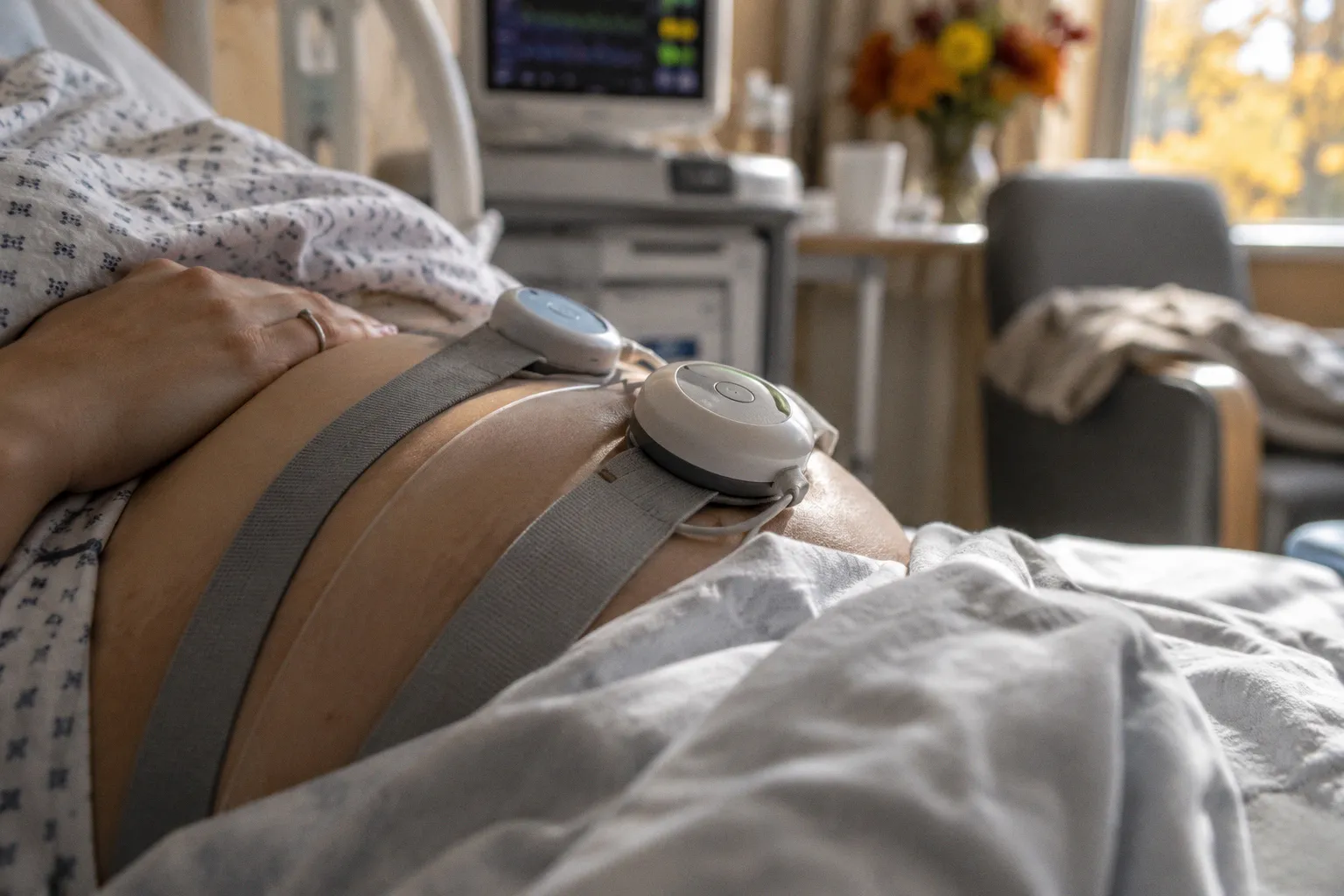
So when the UK Medicines and Healthcare products Regulatory Agency (MHRA) puts out a safety note about those very monitors, we all need to pay attention, even those of us practicing far outside the UK. In its September 2026 monthly safety roundup, the agency flagged specific risks tied to wireless cardiotocography (CTG) systems, the kind that let laboring patients move around instead of being tethered to the bed by a cable. The core concern: radio-frequency telemetry can misbehave, and when it does, the reading on the screen may not reflect what is actually happening with your baby's heart rate.
What the MHRA actually flagged
According to the agency's roundup, the safety recommendations for wireless CTG monitoring systems during labor center on RF telemetry risks, including cross-talk between devices, trace errors, and signal dropouts. In plain terms, the wireless signal that carries your baby's heart rate and your contractions from the sensor to the monitor can be interrupted, garbled, or replaced by another nearby signal. The MHRA is advising obstetric teams to put safeguards in place to prevent these problems from translating into an erroneous fetal heart rate assessment, which is the last thing any of us want at the bedside.
The guidance is particularly relevant because wireless CTG has become the default in many labor wards. It is genuinely liberating to walk the halls, soak in a bath, or change positions without losing the tracing, and we don't want to roll that benefit back. What the regulator is asking for is a layer of clinical vigilance on top of the convenience: knowing the technology's failure modes, checking the trace for plausibility, and not treating a clean-looking wireless strip as automatic proof of fetal wellbeing.
Why this matters for your birth plan
Even if your local unit is not in the UK, safety advisories like this tend to ripple outward through professional societies, manufacturer training, and accreditation standards. So if you are currently pregnant and planning where to deliver, this is a reasonable topic to raise with your midwife or obstetrician. Ask which CTG system the unit uses, whether it is wireless or wired, and what the staff does when the signal quality drops. A good team will have a clear protocol: a repeat application of the transducer, a switch to a cabled lead, or a quick bedside assessment with a handheld Doppler if the trace is unreliable.
We often see patients who assume that any number on the screen is gospel. In reality, every monitoring technology has blind spots, and wireless telemetry adds a small but real set of them. The reassuring part is that awareness is half the fix. When staff know to look for cross-talk, spot a dropout, and question a tracing that does not match the clinical picture, outcomes stay protected. Your job as the patient is simply to ask the question, because the best labor units are the ones that welcome it.
Next question to ask your doctor
Before your next prenatal visit, write this down: "If I need continuous monitoring in labor, how does your team handle signal loss or artifact on the wireless CTG, and at what point would you switch to an internal scalp electrode or a different method?" That single sentence opens a conversation about exactly the safeguards the MHRA is calling for, and it tells you, very quickly, whether your unit has thought this through.