IVF cycle preparation: essential baseline tests and medical checklist
When patients arrive for their first fertility consultation, almost everyone has the same reaction to the printed test requisition: a quick scan, a small intake of breath, and then the quiet question, do I really need all of these?
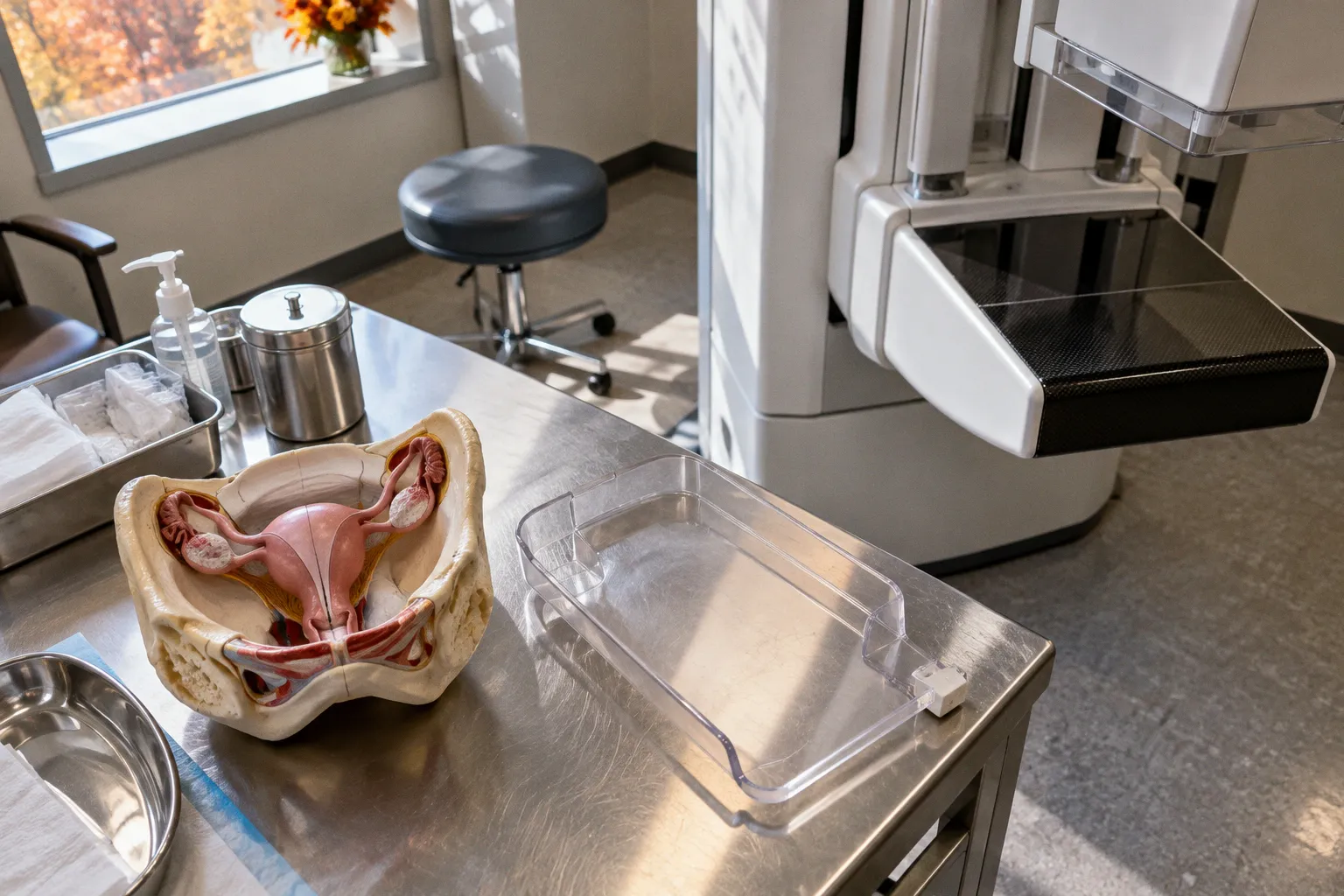
The infertility evaluation, as the American Society for Reproductive Medicine describes it, rests on three parallel pillars: confirming that you are ovulating, that your reproductive tract is structurally open and sound, and that a semen analysis provides a baseline picture of your partner's contribution. We evaluate both partners in parallel whenever possible, because fertility is a shared physiology, and running tests sequentially costs time you may not have.
The framework: what an evidence-based workup actually evaluates
Before any blood is drawn, your reproductive endocrinologist will sit with you for a thorough history and physical exam. That conversation is where the test list comes from. We are listening for cycle length and regularity, prior pregnancies, pelvic surgery, infections, contraceptive history, and the timeline of how long you have been trying. For women under 35, the workup typically begins after twelve months of unprotected intercourse without conception; for women 35 and older, that window shortens to six months. If you have a known history of endometriosis, tubal disease, fibroids, recurrent loss, or a same-sex partnership using donor sperm, evaluation is often immediate, regardless of how long you have been trying.
From that conversation, your clinician chooses tests. The framework has three lanes.
First, ovulatory function. For most women with regular cycles between 21 and 35 days, additional testing to confirm ovulation is generally unnecessary unless there are signs of androgen excess such as new hirsutism. If your cycles are irregular, missing, or unusually long, we add serum progesterone drawn in the luteal phase, and sometimes a thyroid panel and prolactin, because thyroid dysfunction and hyperprolactinemia are treatable causes of anovulation that are worth ruling out before you spend months in treatment.
Second, reproductive anatomy. A transvaginal ultrasound lets us look at uterine shape, the endometrial cavity, the ovaries, and any obvious masses such as fibroids or ovarian cysts. This is a structural snapshot, not a fertility test in the strict sense, but it changes what we plan to do next.
Third, semen analysis. The American College of Obstetricians and Gynecologists describes this as a basic investigation for men, assessing sperm count, motility, and morphology. We almost always run it early in the workup, before more invasive female testing, because a clear male-factor finding can redirect the entire treatment plan, sometimes toward IUI or IVF with specific sperm retrieval rather than toward further female investigation.
We do not run a universal pre-IVF panel. The requisition you receive should read like an answer to a specific clinical question, not a menu.
Ovarian reserve: timing, meaning, and what these numbers will and will not tell you
Ovarian reserve testing is the area where patients arrive most anxious and where misinformation is most concentrated. We measure ovarian reserve to estimate how your ovaries are likely to respond to stimulation, and therefore how many eggs we can realistically retrieve. The markers do not measure egg quality, do not predict with any certainty whether you will get pregnant, and should not be used as the sole reason to deny treatment to anyone.
There are three commonly used tests, and their timing reflects the biology of the cycle.
Basal FSH and estradiol are drawn together on cycle days two through four, in the early follicular phase. FSH at this point reflects the pituitary's effort to recruit a follicle cohort, and estradiol helps interpret an FSH value, because a "normal" FSH paired with a high estradiol can mask declining reserve. That is why both are ordered together rather than separately.
AMH (anti-Müllerian hormone) can be drawn on any day of the menstrual cycle, because it is produced by small antral follicles and stays relatively stable across the cycle. AMH gives us a sense of the remaining follicular pool.
The antral follicle count is performed by transvaginal ultrasound, usually during the same early-follicular-phase window. The sonographer counts small resting follicles in both ovaries, and the total gives another estimate of the cohort that will respond to stimulation.
| Marker | When it is drawn | What it estimates | What it does not |
|---|---|---|---|
| Basal FSH + estradiol | Cycle days 2–4 | Pituitary drive to recruit follicles; combined reading clarifies interpretation | Egg quality, pregnancy likelihood |
| AMH | Any cycle day | Size of the remaining follicular pool | Whether you will conceive, exact time to menopause |
| Antral follicle count (AFC) | Early follicular phase | Cohort likely to respond to stimulation | Whether IVF will succeed, embryo quality |
Read together, these three give a more reliable picture of response than any single number. We use them to choose a stimulation dose, to decide between antagonist and agonist protocols, and to counsel you about realistic egg yield. We do not use them to decide whether you "deserve" treatment.
Reproductive anatomy: imaging the uterus and checking tubal patency
Your uterus and fallopian tubes need to be evaluated as a functional unit, but the tools we use depend on what we are looking for.
Transvaginal ultrasound gives us the uterus: its shape, the thickness and pattern of the endometrium, the presence of fibroids or polyps, and the appearance of the ovaries. If a fibroid or polyp is distorting the endometrial cavity, your clinician may recommend removal before an embryo transfer, because the implantation environment matters even in IVF, where we are placing an embryo directly into the uterus.
For tubal patency, ASRM identifies HSG (hysterosalpingography) and SHG (sonohysterography) as the recommended tests. HSG uses fluoroscopy and contrast injected through the cervix to fill the uterine cavity and fallopian tubes; SHG uses saline infused during ultrasound. HSG is the better test for evaluating tubal patency specifically, while SHG gives a more detailed view of the inside of the uterine cavity and can be preferable when cavity assessment is the priority.
A point worth raising: tubal-patency testing is not automatically required before every IVF cycle. In IVF we bypass the tubes, so if you already have a known bilateral tubal blockage, the diagnostic value of confirming it is limited. That said, hydrosalpinx (a blocked and fluid-filled tube) is a different story. The fluid can leak into the uterine cavity and reduce implantation rates, which is why we often recommend removal or proximal occlusion of a hydrosalpinx before transfer. Your clinician should explain whether tubal evaluation is being done because you are still considering natural or IUI pathways, or because a hydrosalpinx needs to be ruled out before IVF.
Infection screening and the hepatitis C protocol
Infectious screening before IVF protects three people: you, your partner, and any future child, and it also protects the embryology lab staff and the gametes and embryos they handle. Every patient entering an IVF cycle should expect routine serologies, typically including HIV, hepatitis B, hepatitis C, syphilis, and often rubella and varicella immunity, with the exact panel varying by clinic and jurisdiction.
Hepatitis C deserves particular attention because of the updated ASRM viral-transmission committee opinion. The current recommendation is to test all male and female patients for hepatitis C before IVF. If a patient tests positive, ASRM advises referral to a hepatitis specialist to discuss treatment, because direct-acting antiviral therapy can clear the virus in the great majority of cases, and a treated patient can often proceed with IVF without the viral-transmission concerns that complicated older protocols.
We also screen for hepatitis B and HIV for similar reasons: if either partner carries the virus, the lab needs to know so that samples are handled appropriately, and there are now well-established pathways for safe conception when one partner is a chronic carrier, including sperm washing for HIV and antiviral suppression for hepatitis B. Rubella and varicella immunity, when absent, prompt a vaccination conversation, with the understanding that live vaccines are typically given before conception rather than during an active treatment cycle, and a waiting period is observed before embryo transfer.
A practical note: clinic requirements for how recent your serologies must be vary, and the items you may be asked to update (HIV, hepatitis B, blood type, rubella immunity, cervical screening) often have specific validity windows. Ask your clinic's coordinator for their window requirements so you are not surprised by a delayed cycle start because a titer quietly expired.
Before any IVF cycle, your clinic should be able to tell you, in writing, exactly which serologies they require, how recent each one must be, and how they want you to handle a positive finding.
Tests you can reasonably question if no one has explained the reason
This is the section where your clinician should welcome your questions. ASRM is explicit that the routine infertility evaluation should not include several tests unless there is a specific clinical indication:
- Laparoscopy — a surgical procedure reserved for situations such as suspected endometriosis that would change management, large fibroids needing removal, or a complex pelvic finding on imaging. It is not a screening step.
- Advanced sperm-function testing — goes beyond the standard semen analysis to look at DNA fragmentation, sperm binding, or oxidative stress. Useful in specific situations like recurrent IVF failure or recurrent loss, but not part of the initial workup.
- Postcoital testing — examines cervical mucus after intercourse. Has largely fallen out of favor because results have not been shown to change treatment outcomes in a useful way. If a clinic suggests it, ask what decision will change based on the result.
- Thrombophilia and immunologic testing — sometimes marketed aggressively to patients with recurrent loss or repeated implantation failure. Evidence supporting routine use in an unselected IVF population is weak; there are specific indications (personal history of clots, certain autoimmune conditions) where they make sense.
- Karyotype — chromosomal analysis recommended in specific situations: history of recurrent pregnancy loss, prior child with a chromosomal condition, or male-factor infertility with very low counts. Outside those contexts, it is not a universal screen.
- Endometrial biopsy for luteal-phase defect — has not been shown to improve outcomes when performed routinely, and is no longer part of standard evaluation.
- Prolactin — reasonable if your cycles are irregular, you have galactorrhea, or other pituitary findings raise suspicion. With regular cycles and no other signs, it adds little.
The right question to ask when any test is proposed is: what decision will this change? If your clinician cannot articulate a downstream decision, the test is probably not in your interest, and a thoughtful explanation should be available.
A practical summary of the workup before you go:
| Category | Common tests | Timing / note |
|---|---|---|
| Ovulatory status | Cycle history ± mid-luteal progesterone | Cycles 21–35 days typically need no further testing |
| Ovarian reserve | Basal FSH + estradiol, AMH, AFC | FSH/E2 on cycle days 2–4; AMH any day; AFC in early follicular phase |
| Reproductive anatomy | Transvaginal ultrasound, HSG or SHG | HSG preferred for tubal patency; SHG for cavity detail |
| Male partner | Semen analysis | Early in the workup, before invasive female testing |
| Infection screening | HIV, hepatitis B, hepatitis C, syphilis, rubella, varicella | Hepatitis C testing now recommended for all patients pre-IVF |
| Often clinic-specific | Blood type and Rh, cervical screening, genetic carrier screening | Validity windows vary; ask your coordinator |
The most useful workup is not the largest one. It is the one in which every test you undergo has a clear job to do.
Questions to bring to your next visit:
- Given my history, which of these tests are you ordering to answer a specific question, and which are routine for your program?
- If my AMH comes back lower than expected, how does that change my stimulation protocol, and would the answer really be different if we did not know the number?
- What is the clinic's policy on hydrosalpinx, and do I need tubal imaging before we proceed to transfer?
- How recent do my serologies need to be, and what is your referral pathway if hepatitis C is positive?
- Is there anything on my requisition that we could hold off on until we have the first round of results back?
That last question is the one we often return to, because it gives your clinician a chance to walk you through the why behind each test, and to drop the ones that are not earning their place. A baseline workup that respects your time, your budget, and the biology of your cycle is one of the early signs that you are in the right hands.