Pre-IVF medical screening: essential tests and documentation
The decision to pursue IVF often arrives before the paperwork does. Then the requisitions begin: blood tests, ultrasound appointments, a semen analysis, records to request from other clinics. The list can look like a hurdle in its own right.
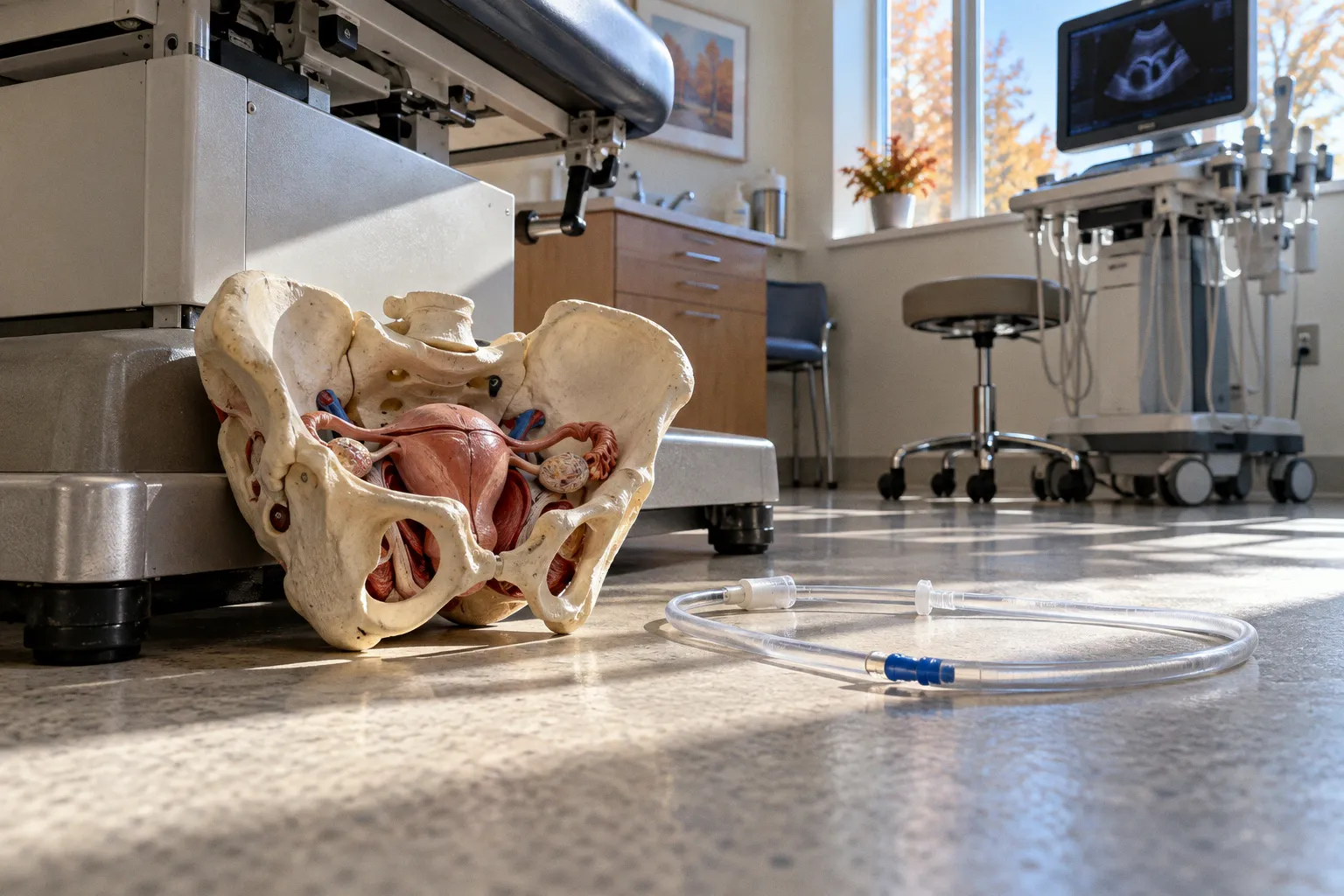
In practice, pre-IVF medical screening is the information-gathering stage that lets a care team plan stimulation, identify issues that may affect treatment, and prepare for the safe handling of eggs, sperm, and embryos.
There is no single pre-IVF medical screening checklist that applies in exactly the same way to every patient. Some tests establish a baseline; others are ordered because of a person’s history, symptoms, previous results, or the rules of the clinic and jurisdiction. The useful question is not whether every test on someone else’s list is necessary for you. It is what each test is meant to clarify, and whether its result could change the plan.
Baseline Hormonal Assessment and Ovarian Reserve Metrics
Hormone testing helps the team estimate how the ovaries may respond to stimulation and identify conditions that could affect ovulation or treatment planning. The specific panel varies, but commonly includes AMH, FSH, estradiol, and sometimes LH, TSH, or prolactin.
FSH and estradiol are often measured early in the menstrual cycle, frequently around day 2 or 3. Estradiol provides useful context for interpreting FSH: an elevated early-cycle estradiol level can make an FSH result appear lower than it would otherwise be. AMH can generally be measured at different points in the cycle. Your clinic can tell you whether it needs a particular appointment date or whether an existing result is recent enough to use.
These tests answer related, but different, questions:
- AMH (anti-Müllerian hormone) and the antral follicle count help estimate the number of follicles likely to respond to stimulation.
- FSH (follicle-stimulating hormone) and estradiol provide information about ovarian activity at the start of a cycle.
- LH (luteinizing hormone) may help interpret ovulatory patterns or provide additional baseline context.
- TSH (thyroid-stimulating hormone) can identify thyroid abnormalities that may need attention before pregnancy.
- Prolactin may be checked when symptoms or history suggest that an elevated level could be affecting ovulation.
The point of ovarian reserve testing is to support planning, not to deliver a verdict on whether pregnancy is possible. AMH and AFC are useful for estimating expected response and likely egg yield. They do not directly measure egg quality, guarantee a particular number of eggs, or predict a live birth on their own. Age and the wider clinical picture matter when interpreting results.
Ovarian reserve tests help estimate how the ovaries may respond to stimulation. They are one part of a fertility assessment, not a standalone measure of whether treatment can succeed.
A lower-than-expected reserve result may lead the team to discuss likely response, medication choices, or the possibility of more than one treatment cycle. A higher AMH or follicle count may prompt attention to the risk of an excessive response and a discussion of how to reduce it. The result is most useful when it is considered alongside ultrasound findings, medical history, and the patient’s goals.
For an ovarian reserve testing timeline, ask which results need to be drawn early in the cycle, which can be done on another day, and how long the clinic will accept them. Bringing previous hormone results can prevent unnecessary repeat testing, though the team may still recommend a new baseline if the results are old, incomplete, or difficult to interpret.
Structural Evaluation of the Uterine Cavity and Pelvic Anatomy
Blood tests cannot show whether a fibroid distorts the uterine cavity or whether a polyp may need further assessment. Imaging fills in that part of the picture. The tests chosen depend on symptoms, history, prior imaging, and the clinical question the team is trying to answer.
A transvaginal ultrasound is commonly used to look at the uterus and ovaries. It can identify visible fibroids, cysts, or other findings and may be paired with an antral follicle count. That count records small follicles seen in the ovaries and helps estimate the pool available to respond during stimulation. Ultrasound also gives the clinician information about the uterine lining, though a standard scan may not show every detail of the cavity.
If a closer look at the cavity is warranted, the clinic may recommend saline-infusion sonohysterography. Sterile fluid is introduced into the uterus during an ultrasound so the cavity can be outlined more clearly. This can help assess findings such as polyps, adhesions, or fibroids that extend into the cavity. It is not automatically required for everyone; its usefulness depends on the history and the initial scan.
Hysterosalpingography (HSG) uses contrast and X-ray imaging to assess the uterine cavity and whether the fallopian tubes appear open. Tubal testing may be less central to an IVF plan than it is to treatments that depend on sperm and egg meeting in the tube, but it can still be relevant in particular circumstances. The clinician may choose it when symptoms, history, or other findings make the information useful.
It is worth asking what an imaging test is intended to establish before scheduling it. A test that answers a specific question can guide the next step; repeating several kinds of imaging without a clear reason can add appointments without necessarily adding useful information. If a scan finds something unexpected, the result may lead to further evaluation before stimulation or transfer. That does not automatically mean IVF has to be abandoned. It means the team needs to understand whether the finding matters for the planned treatment.
Infectious Disease Screening and Regulatory Requirements
Infectious disease screening is part of many IVF programs, but the exact requirements are not universal. They vary by jurisdiction, clinic policy, treatment type, and the circumstances of the people providing eggs or sperm. Clinics may require testing for both partners before gametes are collected or used, and some requirements may come from local regulations. The clinic should provide its own current list rather than relying on a checklist found online or one supplied by another program.
Testing may include screening for infections such as HIV, hepatitis B, hepatitis C, and syphilis. Other tests may be added depending on the rules that apply and the patient’s history. Rubella immunity may also be assessed for the person who may carry a pregnancy, since immunity can affect preconception planning. A positive or unclear result needs clinical interpretation; it does not, by itself, explain what treatment options remain.
Screening has a clinical purpose, and it can also inform how a clinic handles and stores reproductive material. Laboratory procedures are designed to reduce risks and follow applicable standards. It is not accurate to assume that all clinics use the same storage arrangements or that a single result would inevitably affect an entire laboratory. If a result is positive, the clinic can explain what precautions, additional evaluation, treatment, or timing changes may be relevant in that specific case.
Timing matters. Some results are accepted for a limited period, and a clinic may ask for updated testing if a cycle is delayed or if treatment is planned later. The validity window is set by the clinic and applicable rules; there is no reliable single timeframe that applies everywhere. Ask which tests are required, when they should be completed, and whether previous results meet the clinic’s requirements. This is especially useful when transferring care or coordinating testing between different providers.
Male Factor Diagnostics: Semen Analysis and Advanced Sperm Testing
A semen analysis is a central part of the assessment when a partner’s sperm will be used. It measures features such as sperm concentration, movement, and appearance. These parameters help the team decide whether conventional IVF, ICSI, or further evaluation may be appropriate. Results need interpretation in context, and one result does not always tell the whole story.
The clinic will give instructions for collection, including any recommended period of abstinence and how the sample should be delivered. Follow those instructions closely. A sample collected or transported outside the clinic’s requirements may be harder to interpret, and the laboratory can explain whether an on-site collection is available.
Semen parameters can vary. If a result is outside the reference range, the clinician may recommend repeating the analysis, reviewing recent illness or other relevant factors, or referring the patient to a reproductive urologist. The next step depends on the pattern of results and medical history. Hormone testing or other investigations may be appropriate in selected cases rather than as routine testing for every male partner.
Sperm DNA fragmentation testing is another possible investigation, but it is not part of every standard pre-IVF workup. A clinician may discuss it in particular circumstances, such as a history or pattern of results that warrants further assessment. It should not be treated as a universal add-on or as a result that automatically dictates one fertilization method. The team can explain what the test might contribute and how its findings would affect the plan.
Male partners may also have infectious disease testing as part of the clinic’s requirements. As with testing for the person providing eggs, the precise panel and timing depend on local rules and clinic policy. This is a good item to confirm early, especially if both partners will be completing tests at different facilities.
Clinical Preparation: Mock Transfers and Cycle Timing Protocols
Once the test results and imaging are available, the team can turn them into a treatment plan. That may include a mock embryo transfer, a review of medication choices, and a decision about when to begin stimulation. Not every patient needs the same preparation, and the clinic should explain why a suggested step is relevant to the individual plan.
A mock embryo transfer is a rehearsal without an embryo. The clinician passes a catheter through the cervix to assess the route and identify any practical difficulty that could matter during a later transfer. The information can help the team plan the procedure, including the choice of catheter or whether additional preparation is needed. Some clinics use a mock transfer routinely; others reserve it for particular histories or anticipated challenges. Ask what the result would change in your case.
Cycle timing is shaped by the test results, the menstrual cycle, clinic scheduling, and the protocol being considered. For some patients, a fresh transfer may be possible. For others, the team may recommend freezing embryos and planning transfer later. That decision can depend on ovarian response, hormone levels, the condition of the uterine cavity, or the need to complete treatment before transfer. A freeze-all approach is not a setback by definition; it can be a deliberate way to separate stimulation from transfer when the clinical picture calls for it.
Other health considerations may also affect preparation. Medication use, chronic conditions, prior anesthesia problems, and body weight can all be relevant to the clinical assessment, but clinic policies differ. Some programs have eligibility criteria tied to BMI or anesthesia safety. If a clinic raises a threshold, ask what concern it is addressing, whether it is a strict policy, and what support or alternatives are available. A number without an explanation is a poor substitute for a conversation about individual risk.
The medical documentation for an IVF consultation is often more useful when it is organized around decisions rather than accumulated as a stack of papers. Bring or request:
- Previous fertility investigations, including hormone results and ultrasound reports.
- Records of prior treatments, procedures, pregnancies, or pregnancy losses, where relevant.
- A current medication and supplement list, including doses if known.
- Semen analysis reports and any related specialist evaluations.
- Results of infectious disease testing, with dates and the laboratory that performed them.
- Relevant medical history, including conditions or surgeries that could affect treatment or pregnancy.
If a record is missing, tell the clinic rather than assuming the consultation has to wait. The team can advise which documents are essential before the visit and which can be sent later. When records come from several providers, include the full report where possible, not just a brief summary. Details such as the date of a test, the cycle day, or the measurement method can affect how a result is interpreted.
A practical way to keep the workup moving is to ask three questions about each test: What clinical question does it answer? Is it required by the clinic or recommended because of my history? How long will the result remain usable for this treatment plan? Those answers make it easier to coordinate appointments and avoid repeating tests that are already adequate.
By the end of screening, you may have a clearer picture of ovarian response, uterine anatomy, sperm parameters, and any health issues that need attention before treatment. You may not have every answer. Some findings lead to follow-up, and a protocol can change as the team learns more. The purpose of the pre-IVF medical screening checklist is not to promise a particular outcome. It is to give you and your clinicians a sound basis for choosing the next step, with the reasons behind that choice made clear.