Endometrial receptivity analysis: navigating the window of implantation
When an embryo transfer does not lead to pregnancy, it is natural to look for a reason that can be measured and, perhaps, corrected.
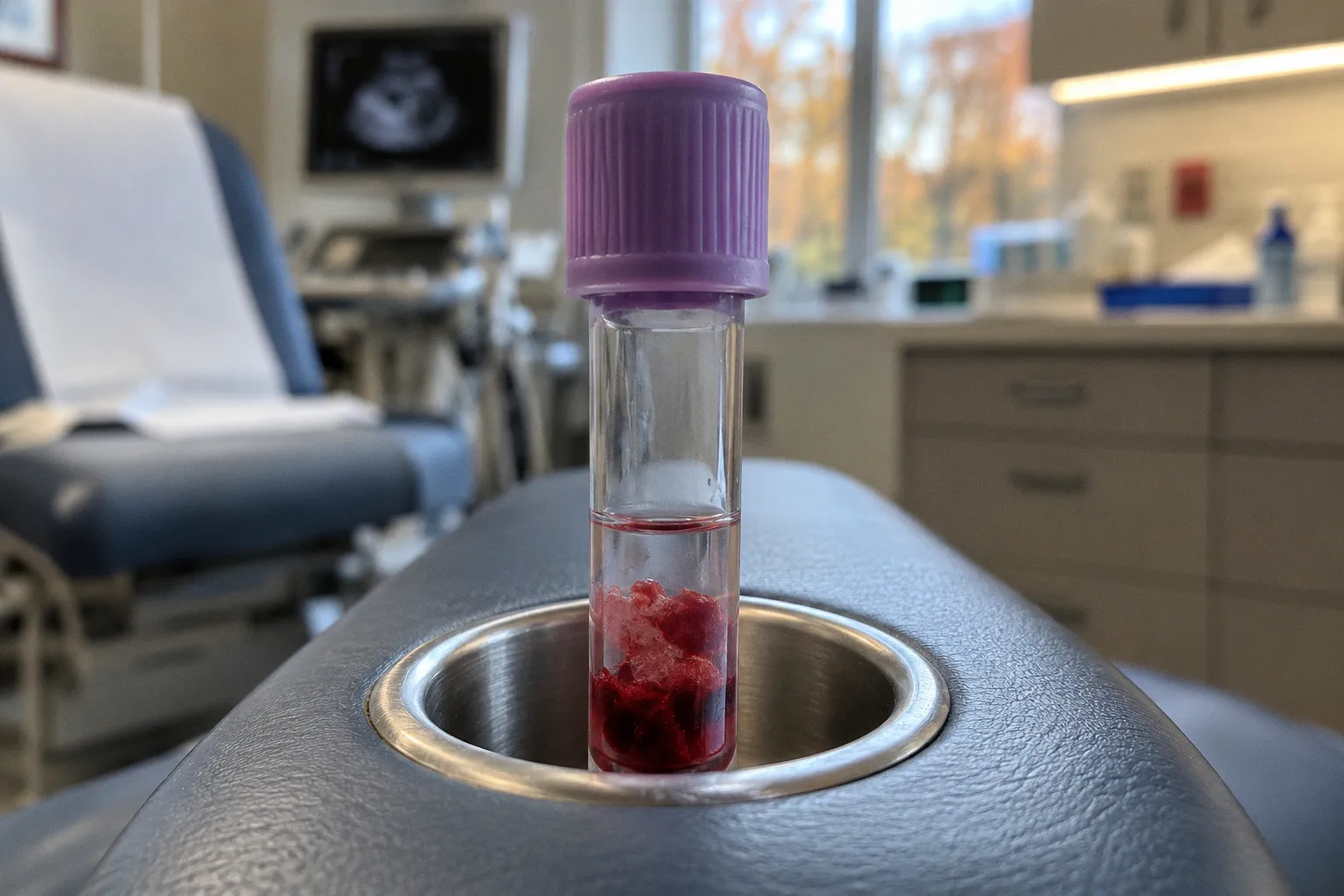
Endometrial receptivity analysis, or ERA, offers one possible explanation: it examines gene activity in a sample of the uterine lining to estimate whether the timing of embryo transfer matches your window of implantation.
That is a meaningful question, especially after repeated unsuccessful transfers. But the test does not reveal every reason an embryo may not implant, and its ability to improve the chance of a live birth remains uncertain. We can make better decisions when we understand what ERA measures, how the biopsy fits into a treatment cycle, and what the evidence does—and does not—support.
What ERA measures inside the uterine lining
The endometrium changes across the menstrual cycle in response to hormones, particularly progesterone. For a limited period, its molecular environment is considered receptive to an embryo. This period is known as the window of implantation.
ERA assesses gene expression in an endometrial biopsy. Traditional ERA testing analyzes a profile based on 248 genes and uses next-generation sequencing to classify the sample as pre-receptive, receptive, or post-receptive. In plain language, the result estimates whether the lining appears to have reached the molecular state associated with receptivity at the time the sample was taken.
This is different from looking at the lining’s thickness or appearance on ultrasound. Those observations can inform an IVF cycle, but they do not measure the same molecular signals. A lining can look suitable on ultrasound while the ERA result suggests that its gene-expression pattern is earlier or later than expected. The test is designed to add another kind of information, not to replace the rest of your fertility assessment.
The usual window of implantation is estimated to last about 30 to 36 hours. In a natural cycle, it is generally described as occurring between LH + 6 and LH + 9; in a hormone-replacement therapy cycle, the corresponding reference is P + 4 to P + 7. These labels count time from an ovulation-related hormone signal or from starting progesterone. The exact schedule depends on the cycle and the clinic’s protocol.
ERA gives a molecular snapshot of the lining at one point in one cycle. It does not provide a complete explanation for an unsuccessful transfer.
That distinction matters. Receptivity is one part of implantation, which also depends on embryo factors and the broader uterine environment. An ERA result cannot establish that an embryo is viable, identify every uterine condition, or guarantee that a transfer timed to the result will lead to pregnancy.
The ERA test procedure, step by step
ERA is generally considered in the setting of embryo-transfer planning, not as a routine substitute for an initial fertility evaluation. The practical purpose is to estimate your window of implantation using a biopsy taken at a defined point in a prepared cycle. Your care team then uses the result to decide whether a future transfer should follow the usual timing or a personalized schedule.
The sequence often looks like this:
1. Your clinician reviews the transfer history and cycle plan. The discussion should include which embryos were transferred, what is already known about embryo quality or chromosome status, and whether other parts of the recurrent implantation failure diagnostic workup need attention. The number of failed transfers alone does not tell us that timing is the cause.
2. A mock cycle is planned. The biopsy is scheduled to match the type of cycle intended for a later frozen embryo transfer. In a hormone-replacement cycle, the timing is counted in relation to progesterone exposure; in a natural cycle, it is linked to ovulation-related timing.
3. An endometrial biopsy is collected. A clinician passes a narrow sampling instrument through the cervix and takes a small sample of the uterine lining. The procedure is brief, although cramping and spotting can occur. Your clinic can explain what discomfort to expect and what pain-relief options are suitable for you.
4. The sample is sent for gene-expression analysis. The laboratory classifies the tissue as pre-receptive, receptive, or post-receptive according to the assay’s profile.
5. The result is interpreted alongside your clinical picture. If the sample is classified as receptive, the team may retain the standard timing used for that type of transfer. If it is classified as pre- or post-receptive, the clinician may discuss shifting progesterone exposure or transfer timing in a subsequent cycle.
6. A later transfer follows the agreed schedule. The result is useful only if its timing can be translated reliably into the transfer protocol. Your clinic should be able to explain how it will count the relevant hours or days and what happens if the next cycle differs from the mock cycle.
The biopsy itself is one piece of the process. The test requires a cycle that can be timed and interpreted, and it adds a procedure before a transfer can be planned. Ask your clinic how the mock cycle will be organized, whether the planned transfer will use the same cycle type, and how the result would change your care.
An endometrial biopsy for fertility testing can cause temporary cramping or light bleeding. The clinic should review your medical history and explain any preparation or follow-up specific to its protocol. If you have concerns about pain, prior difficult procedures, or the possibility of an infection or another complication, raise them before scheduling rather than trying to manage those concerns on the day.
What a shifted window can—and cannot—tell you
Studies have reported a displaced window of implantation in roughly 25% to 35% of patients evaluated for endometrial receptivity. That figure describes selected patient groups studied for this question; it should not be read as the likelihood that any one person’s failed transfer was caused by mistimed receptivity. Nor does a shifted result prove that adjusting transfer timing will improve the outcome.
If the tissue is classified as pre-receptive, the sample’s gene-expression pattern has not yet reached the profile associated with receptivity at the time it was taken. A post-receptive classification suggests that the sample appears to be beyond that profile. A receptive result means the profile matched the expected receptive category at that sampling point. Each interpretation is tied to the timing and conditions of that particular cycle.
For a personalized embryo transfer protocol to follow from the result, the team needs a clear bridge between the biopsy cycle and the transfer cycle. For example, the clinician must explain how progesterone exposure in the mock cycle maps onto the schedule for the later transfer. A result without a workable timing plan may add information without changing the decision.
There are also limits to treating a single biopsy as a permanent map of your physiology. The test describes the tissue sampled in a particular cycle. How stable individualized timing remains across later cycles, years, or changes in the uterus is not fully established. If your treatment circumstances change, your care team should reconsider whether the earlier result still applies rather than assuming it will always dictate timing.
Evidence, uncertainty, and the decision to test
The central question is not whether ERA can classify gene-expression patterns. It can. The harder question is whether using that classification improves the outcomes that matter to patients, especially live birth.
Evidence from studies of transfers involving euploid embryos has not reached a consistent conclusion about whether routine ERA testing improves overall live birth rates compared with standard frozen embryo transfer. That uncertainty is important when considering testing after unsuccessful transfers, and it is equally important for patients at the start of IVF. The available evidence does not establish routine ERA as beneficial for every first-time IVF patient without a history of recurrent implantation failure.
This is why the decision is best made in the context of your full treatment history. A discussion about ERA should sit alongside a review of embryo-related information, transfer details, the uterine evaluation already completed, and the reasons your clinician considers plausible in your specific case. A test focused on timing cannot resolve questions outside its scope.
| Question | What ERA can contribute | What it cannot establish |
|---|---|---|
| Is the lining’s gene-expression profile early, receptive, or late at the biopsy timing? | A molecular classification of the sampled tissue | A complete account of why implantation did not occur |
| Could transfer timing be adjusted for a later cycle? | A basis for discussing a personalized schedule | That changing the schedule will result in pregnancy |
| Should every IVF patient have the test? | Information that may be considered in selected clinical contexts | Evidence that routine testing improves live birth for all patients |
If ERA is proposed, it is reasonable to ask how the result is expected to change your next step. If the answer is that the clinic would follow the same transfer timing regardless of the result, the practical value of testing may be limited. If the result could alter the schedule, ask what evidence supports that adjustment in a situation like yours and how the team will evaluate whether the plan is appropriate.
Bringing the result into a transfer plan
When ERA indicates that receptivity may occur earlier or later than the standard schedule, the care team may tailor the timing of a subsequent transfer. In hormone-replacement cycles, the standard reference point commonly used for frozen embryo transfer is P + 5, described as 120 hours of progesterone. A personalized plan may depart from that baseline if the test and clinical context support a change.
The calendar details deserve careful attention. Progesterone timing is counted from the start of exposure, and the planned embryo transfer must correspond to the clinic’s interpretation of the result. Ask whether the schedule is expressed in hours or days, how the first dose is timed, and what to do if a dose is delayed or missed. Those are practical questions, not a sign that you distrust the plan.
A natural-cycle transfer follows a different timing logic because it is organized around ovulation-related signals rather than a progesterone start date alone. The team should make clear which cycle model the biopsy represents and whether the later transfer will use the same approach. If the mock and transfer cycles differ, ask how the clinic accounts for that difference.
It is also useful to discuss what the clinic would do after a receptive result. The result may support continuing a standard schedule, but it does not rule out other reasons for a failed transfer. If implantation does not occur after a timing adjustment, the next conversation should return to the whole clinical picture rather than treating ERA as the final diagnostic answer.
The questions worth taking to your appointment
You do not need to decide whether ERA is useful based on the test’s technical sophistication. The decision should come down to whether it addresses a plausible question in your treatment history and whether the answer could change care.
Consider asking:
- What specific question are we trying to answer with ERA in my case?
- How does my transfer history fit the clinic’s definition of recurrent implantation failure?
- What other parts of my evaluation have been considered, and what remains uncertain?
- Will the biopsy cycle match the type of cycle planned for my embryo transfer?
- If the result is pre-receptive or post-receptive, exactly how will the transfer schedule change?
- What are the discomforts, risks, costs, and likely time implications of adding the biopsy cycle?
- How should we interpret a receptive result if a later transfer is unsuccessful?
- What evidence supports using the result for patients with a history like mine?
These questions can help you separate a test that sounds precise from one that has a clear role in your plan. The most helpful next step is to ask your fertility clinician: “If my ERA result is different from the expected timing, what exactly will you change in my next transfer—and what would we conclude if the transfer still does not work?”